
Fast and slow brake pad wear: facts and myths
Many drivers and mechanics believe that a slowly wearing brake pad must wear out the disc. We spoke to a TRIBO process engineer who works with friction formulations and a brake dynamometer every day to find out why the reality is more complex.
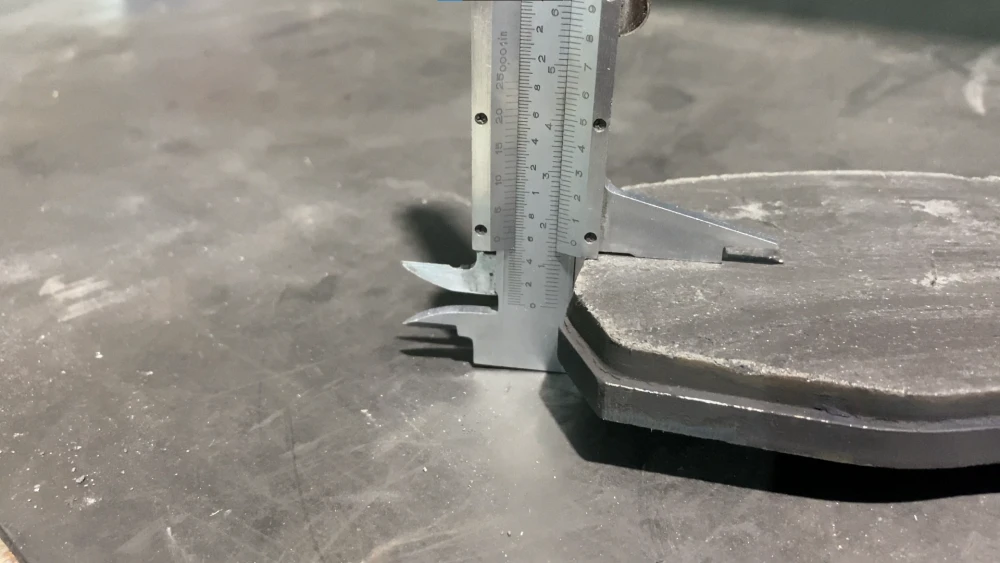
Let’s start with the main question. Does a slowly wearing brake pad necessarily wear out the disc?
No, and this is one of the most persistent myths. The reasoning seems convincing: if material has not been lost from the pad, it must have been lost somewhere else. But that relationship only holds in simple systems. The pad–disc friction pair follows more complex rules. Low pad wear certainly does not guarantee high disc wear in real operating conditions.
But surely friction has to cut material away?
It can, but that is only one mechanism. Pad wear is commonly divided into four groups, which act simultaneously during real braking:
- abrasive wear,
- adhesive wear,
- thermochemical wear,
- delamination wear.
So every figure expressed as “mm per 10,000 km” reflects a combination of processes. They can have different causes and different consequences for the disc.
Let’s take them one at a time. What is abrasive wear?
This is the mechanism most people picture: hard particles in the pad remove material from the surface of the disc. But there is an important detail. The abrasive particles themselves also wear down. In other words, the cutting tool becomes blunt as it cuts. It is therefore inaccurate to say that the pad “only cuts the disc”: both surfaces wear in this process.
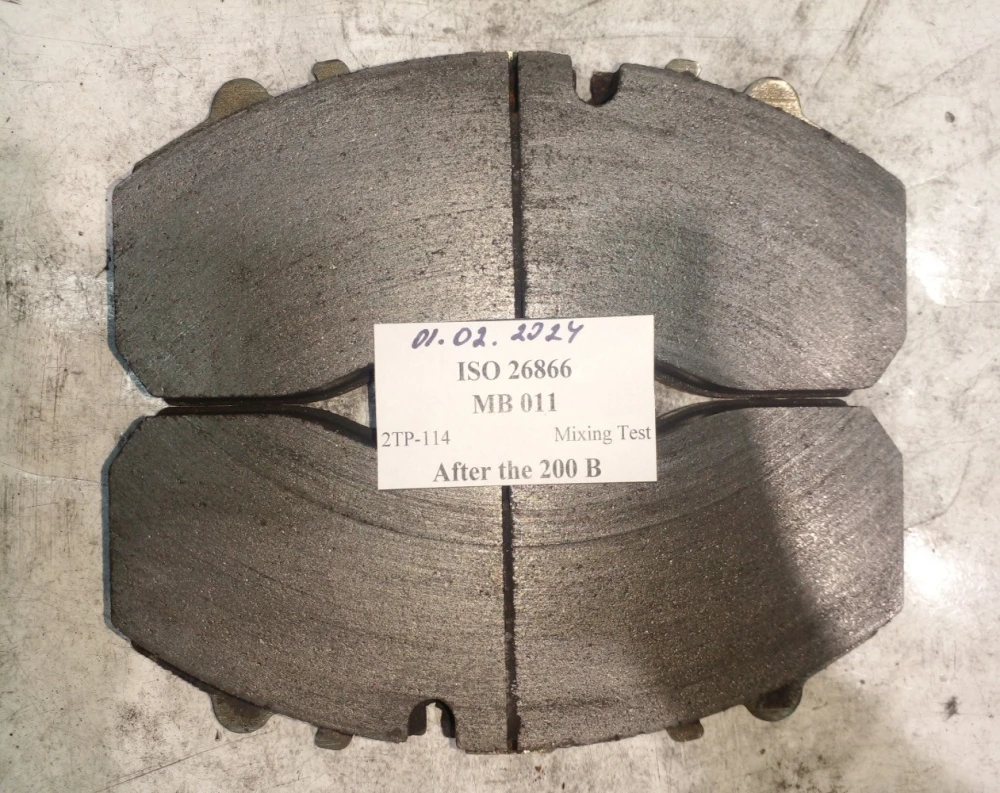
Adhesive wear sounds more complicated.
It is actually quite easy to visualise. Material particles detach from the pad or the disc and adhere to the opposite surface. Material can transfer from the pad to the disc and vice versa. This forms a friction transfer layer on the disc, which under normal conditions can even help stabilise braking.
And thermochemical wear?
This is wear caused by heat. During braking, particularly when a heavy vehicle travels downhill, the surface becomes very hot. The binder in the pad degrades, while components of the mixture oxidise and corrode. Material is lost through thermal decomposition and loses its internal cohesion, without any cutting action on the disc.
What about the fourth mechanism, delamination?
Here, material flakes off in layers. High subsurface stresses accumulate until a crack forms and a layer separates. This is closer to fatigue damage than to abrasion.
That covers the theory. What would a practical example look like?
Take two pads with exactly the same ingredients apart from one difference: the resin binding the mixture. Both use phenol-formaldehyde resin, but with different modifications. In one pad it is modified with nitrile rubber (NBR), and in the other with boron.
What happens then?
The pads can have the same abrasiveness towards the disc. In this example, the hard particles are the same in both formulations. But as the temperature rises, the pad with the NBR-modified resin starts to wear much faster because its binder degrades. The pad with the boron-modified resin remains more stable.
So does the faster-wearing pad cause more damage to the disc?
This is where the myth breaks down. The faster-wearing pad has not become more abrasive towards the disc. It has simply lost material because its resin degraded; that loss was not caused by increased disc abrasion. In this example, the abrasiveness of the two pads was the same. The conclusion is that pad wear rate alone cannot tell us how much wear the pad causes on the disc.
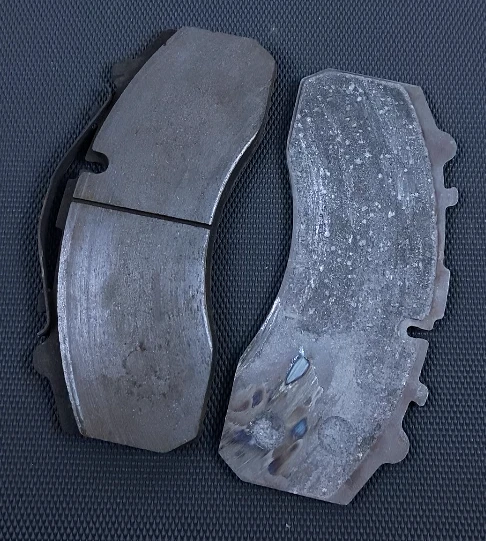
Does that mean pad wear rate tells us nothing on its own?
It does tell us something — about the pad itself. It shows how the pad behaves under particular conditions. It does not tell us about the disc until we assess disc wear separately. That is why we measure the wear of both components of the friction pair in the laboratory.
How do you make a pad that lasts and also limits disc wear?
Through a balanced formulation, designed for the pad’s intended application. A truck on long-distance routes, a bus with frequent stops and a railway vehicle each have their own temperature range, loads and braking patterns. Matching the formulation to these conditions gives the pad good wear resistance while limiting wear of the mating surface.
If you had to leave drivers and mechanics with one thought, what would it be?
Do not draw conclusions about the disc by looking only at the pad. Pad wear and disc wear must be assessed separately, with an understanding of the operating conditions. The myth that “if the pad wears slowly, it must be wearing out the disc” can be put to rest.